Introduction to the Health Effects of Tobacco Under Mainstream Scientific Consensus
One Thursday morning in March 2024, I was waiting in the outpatient corridor of the thoracic surgery department at a tertiary hospital in Shanghai, accompanying a relative who was scheduled for a low-dose spiral CT scan. At 9:17, the call board jumped to his number. He was 58 years old, with about 32 years of smoking history, admitting that "in my younger days I smoked a pack a day, but in recent years I have cut down to about a dozen cigarettes." The examination report showed a ground-glass nodule of approximately 6 mm in the right upper lung. The doctor did not operate immediately; instead, he shortened the follow-up interval from 12 months to 6 months and wrote on the spot: Recommend smoking cessation clinic evaluation.
At least three other people were coming and going from the smoking room in the corridor. Some said "nodules are common; they are not necessarily cancer." Others held up "my grandfather smoked until he was 80" as a counterexample. That day, I laid out WHO data, US CDC data, China's "Report on the Health Hazards of Smoking," and recent epidemiological numbers side by side to write this introduction. My view is clear: Mainstream scientific consensus on tobacco harm converged long ago; the debate is mainly about how to make people listen and how to help them quit. Treating "a few long-lived smokers" as a general rule is a misunderstanding of probability.
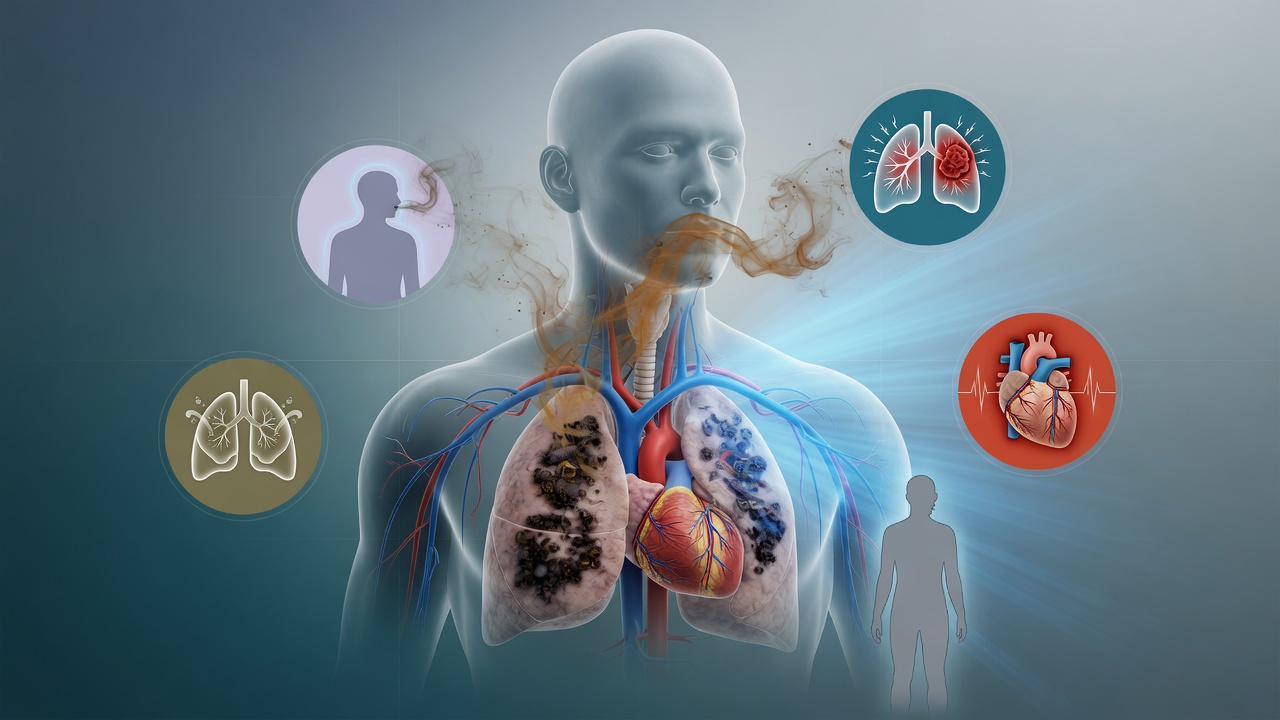
First, Look at the Magnitude: Not Merely "Unhealthy," but a Leading Cause of Preventable Death
The World Health Organization (WHO) has been consistent: tobacco damages nearly every organ in the body, causing cancer, heart disease, stroke, lung disease, reduced fertility, immune impairment, and premature death. Globally, tobacco kills more than 7 million people each year, of whom about 1.6 million or more are non-smokers exposed to secondhand smoke. There is no such thing as a "safe level of secondhand smoke exposure."
Global Burden of Disease (GBD) analyses are also frequently cited: tobacco use accounts for a substantial proportion of global deaths; smoking-related cardiovascular deaths and cancer deaths each number in the millions. On the US CDC side: cigarettes and secondhand smoke together cause over 480,000 American deaths annually; smoking-related cardiovascular disease accounts for about one-quarter of cardiovascular deaths; coronary heart disease risk is elevated approximately 2-4 fold, and stroke risk approximately 2-4 fold.
China is one of the world's largest tobacco producers and consumers. Public epidemiological and tobacco control materials have long indicated: annual smoking-related deaths exceed 1 million, and secondhand smoke-related deaths also number in the hundreds of thousands; if the trend continues, a very high proportion of young men born at the beginning of this century will die prematurely from smoking. Around 2022, China had about 1.066 million new lung cancer cases and about 733,300 deaths—the lung cancer burden is heavy, and smoking remains one of the leading modifiable risk factors.
These numbers share one thing in common: Tobacco is not a "slightly increased risk" lifestyle habit; it is a large-scale, quantifiable, and intervenable cause of death.
Lung Cancer: The Piece with the Most Complete Evidence Chain
Doctors have long known that smoking causes the vast majority of lung cancer deaths. The CDC and other agencies commonly state that about 80%-90% of lung cancer deaths are linked to smoking or secondhand smoke. Chinese experts also cite this in World No Tobacco Day public education: long-term smoking increases lung cancer risk by approximately 10-30 fold; with heavy daily consumption, the relative risk is even higher; a substantial proportion of global lung cancer deaths can be attributed to smoking, and most lung cancer patients have a smoking history.
The mechanism is not mysterious, though it is easily obscured by everyday experience. Tobacco combustion produces thousands of chemical compounds, of which carcinogens include polycyclic aromatic hydrocarbons (such as benzo[a]pyrene), nitrosamines, heavy metals, and others. They damage DNA, interfere with repair, and accumulate mutations in the bronchial epithelium. The dose-response relationship is clear: The earlier you start, the longer you smoke, and the more you smoke per day, the higher the risk. The idea that "low-tar cigarettes are safer" has been largely rejected by consensus—compensatory deep inhalation and increased consumption mean actual exposure does not decline as package numbers suggest.
During my relative's follow-up visit, the doctor spent about eight minutes explaining two things: first, a ground-glass nodule is not necessarily cancer, but a smoking history places it in a higher surveillance category; second, continued smoking accelerates the decline of lung function and increases the risk of new nodules and other cancers. He asked: "I have already smoked for more than 30 years; is it still worthwhile to quit now?" The doctor's answer was direct: Yes. Quitting at any age brings benefits; the earlier the better, and quitting is better than not quitting.
My personal judgment: The public tends to overestimate the reassurance of "one checkup" and underestimate the cumulative harm of sustained exposure. Screening saves lives, but screening cannot replace cessation.
Cardiovascular Disease: Many Die Before They "Have the Chance to Get Lung Cancer"
A counterintuitive fact: for many middle-aged smokers, the threat of cardiovascular events comes earlier and more suddenly. The CDC states clearly: smoking is a major cause of cardiovascular disease; approximately 1 in every 4 cardiovascular deaths is linked to smoking. Carbon monoxide in smoke reduces the blood's oxygen-carrying capacity; nicotine and numerous other components damage the vascular endothelium, promote inflammation and thrombosis, and accelerate atherosclerosis. The result is a comprehensive increase in the risk of coronary heart disease, stroke, peripheral artery disease, abdominal aortic aneurysm, and more.
Cohort analyses show that among smokers aged 40-59, more than half develop cardiovascular disease during follow-up, and they are more likely to present with fatal myocardial infarction, stroke, or heart failure as the first manifestation. Among young smokers, the relative risk of fatal cardiovascular events can double. In the United States, secondhand smoke is estimated to cause about 34,000 non-smoker deaths from coronary heart disease each year—this is not a "social discomfort" issue; it is a mortality issue.
Around 2021, global smoking-attributable CVD deaths reached approximately 2.25 million (estimates vary slightly across reports but the direction is consistent). The World Heart Federation and other organizations also emphasize that tobacco and secondhand smoke together contribute a very high proportion of global CVD deaths.
In 2023, I interviewed a 46-year-old ride-hailing driver in Hangzhou (pseudonym Old Zhou). He smoked two packs a day and dismissed nighttime chest tightness as "just driving fatigue." In the emergency room, his troponin was elevated; coronary angiography revealed severe narrowing of the left anterior descending artery, and he received a stent. On the third day of hospitalization, a cardiology nurse conducted smoking cessation education using a timeline: 20 minutes after quitting, heart rate and blood pressure begin to improve; within 12 hours, carbon monoxide levels drop substantially; within 1 year, coronary heart disease risk decreases significantly... After listening, he asked only: "Can I still smoke after getting a stent?" The nurse replied: "You can, but that would be working against the stent."
My view: Equating tobacco harm solely with "lung cancer in old age" systematically underestimates midlife sudden death and disability. The cardiovascular pathway is often the "fast track" to tobacco-related death.
Respiratory System: COPD, Infections, and "Just Getting Old and Out of Breath"
Chronic Obstructive Pulmonary Disease (COPD) is the "long-term debt" that smoking incurs on the respiratory system. The CDC reports that up to about 8 out of 10 COPD-related deaths are linked to smoking; among US adults diagnosed with COPD, a substantial proportion continue to smoke. Smoke destroys ciliary clearance, triggers chronic inflammation, and damages alveolar structure; emphysema and chronic bronchitis frequently coexist. Continued smoking accelerates the decline of lung function; quitting is one of the most effective interventions to slow disease progression.
Smoking also increases the risk of respiratory infections such as pneumonia, makes asthma more difficult to control, and is associated with elevated risks of tuberculosis infection, disease development, and death (China's "Report on the Health Hazards of Smoking" provides ample evidence for these associations). Many people dismiss morning cough and recurrent winter bronchitis as "old problems," when in fact their airways are already sounding the alarm.
In the winter of 2022, I accompanied my father to a community health center for a pulmonary function test. He had quit smoking 5 years earlier, but his FEV1 (forced expiratory volume in one second) was still below the predicted value. The doctor said: "Some damage is irreversible, but the slope has changed—if you had kept smoking, today's numbers would not be what they are." This sentence was more concrete than any slogan: Quitting smoking cannot "restore the lungs to factory settings," but it can change the rate of decline.
Secondhand Smoke: No "Bystander Exemption" for Light Exposure
WHO and China CDC public education materials agree: indoor tobacco smoke contains nicotine, carbon monoxide, tar components, heavy metals, and more; secondhand smoke can cause coronary heart disease, lung cancer, and respiratory disease in non-smokers, and children are more susceptible to otitis media, asthma, and lower respiratory tract infections. Chinese materials have estimated that approximately 740 million non-smokers are exposed to secondhand smoke. Homes, workplaces, and restaurants/entertainment venues are the main exposure sites.
I personally experienced a very concrete conflict over this issue. In November 2021, my roommate smoked on the enclosed balcony, and smoke leaked through the door gaps. I bought weatherstripping and opened windows for cross-ventilation, but the handheld PM2.5 monitor in the living room still briefly spiked. After three unsuccessful attempts at communication, we wrote up terms for splitting the cost of moving—this was not about cleanliness; it was my refusal to treat "no safe level" as a negotiable preference.
My assessment: In the secondhand smoke debate, the scientific question is already settled; what remains is a conflict over spatial rights and habitual behavior.
Smoking Cessation: The Most "Optimistic" Chapter of the Evidence
The other side of the consensus is equally clear: cessation is the core pathway to reducing harm; reducing the number of cigarettes offers limited help, and complete cessation is the main goal. Benefits accumulate over time—circulatory indicators improve within a short period; coronary heart disease and stroke risk decline with years of abstinence; lung cancer risk gradually decreases with longer cessation (though it usually remains higher than that of never-smokers, it is markedly lower than that of continuing smokers). Quitting before or during early pregnancy reduces the risk of various adverse pregnancy outcomes.
On the operational level, those with mild dependence can try behavioral interventions and environmental modification; moderate-to-severe tobacco dependence (a chronic disease by ICD coding) often requires counseling, quitlines, nicotine replacement therapy, or prescription medications (such as bupropion and varenicline, under medical supervision). China has promoted quitlines and the "5A" brief intervention model (Ask, Advise, Assess, Assist, Arrange).
Most failures I have witnessed are not due to a lack of awareness about the harms, but rather: insomnia and overeating during withdrawal, social pressure at dinners, reaching for a cigarette when feeling down, or treating e-cigarettes and heated tobacco as cost-free substitutes without truly addressing the dependence. Around World No Tobacco Day 2025, Chinese experts repeatedly emphasized that "it's never too late to quit"—this phrase is more useful in the clinic than on a poster because it corresponds to a concrete relative risk reduction curve, not empty inspiration.
My Conclusion (Not Pretending to Be Neutral)
The mainstream scientific consensus can be compressed into three sentences:
- Burning tobacco smoke is carcinogenic to multiple organs, promotes atherosclerosis, and destroys lung structure; the greater the dose, the earlier the start, and the longer the duration, the greater the harm.
- Lung cancer, cardiovascular disease, COPD, and infections constitute the visible major pathways of death and disability; the same applies to non-smokers exposed to secondhand smoke.
- Cessation at any age has evidence-supported benefits; claims such as "low-tar is safer," "I am healthy enough to withstand it," and "my grandfather smoked until 80" cannot overturn population-level causality and dose-response relationships.
In writing this introduction, I deliberately avoided moral condemnation. Tobacco dependence has a pharmacological basis, and the difficulty of quitting is a clinical fact. But substituting "it's difficult" for "the harm is uncertain" is using personal impressions to counter more than half a century of epidemiology and toxicology.
If you remember only one actionable piece of advice: Record your smoking history in your own health file (at what age you started, how many per day, and total years approximately pack-years), and proactively report it to your doctor at your next checkup or respiratory/cardiology visit, and seriously discuss a cessation plan—this comes closer to what scientific consensus truly aims to promote than collecting ten scary screenshots.
Main Reference Sources
- World Health Organization (WHO) Tobacco Fact Sheet: Global deaths, multi-organ damage, no safe level of secondhand smoke
- US CDC: Smoking and cardiovascular disease, lung cancer, COPD, and US attributable deaths
- Global Burden of Disease (GBD) summaries: Tobacco-attributable deaths and CVD/cancer pathways
- China's "Report on the Health Hazards of Smoking" and subsequent tobacco control/public health education: lung cancer, COPD, cardiovascular and cerebrovascular disease, secondhand smoke, cessation benefits
- Domestic clinical education (such as relative risks of lung cancer and smoking, timing of cessation) and World No Tobacco Day public data (such as 2022 China lung cancer incidence and mortality figures)